
Interaction of colour:
Aria X Josef Albers
The Brief:
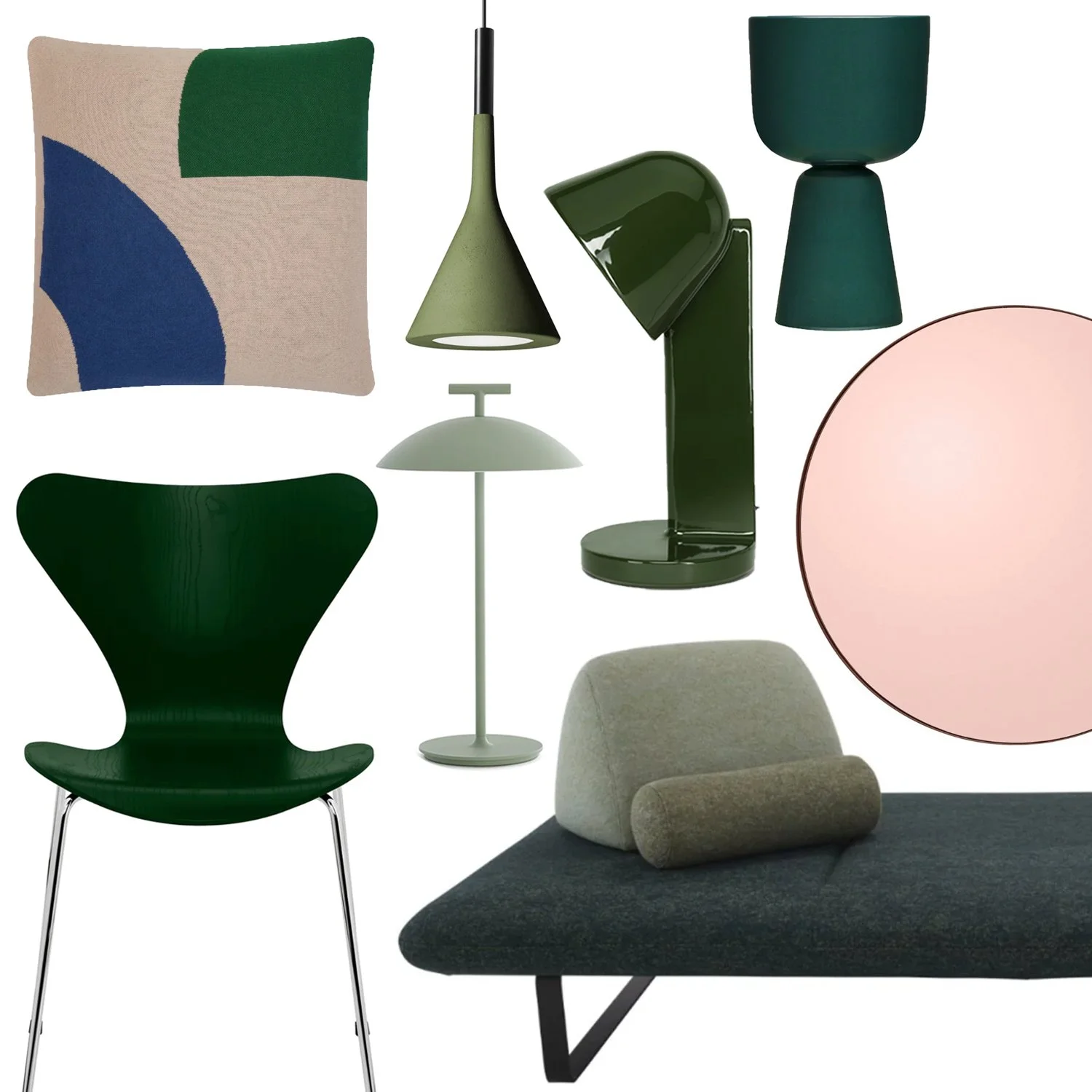
Aria wanted to implement a new “filter by colour” tool on their website allowing users to search for furniture and lighting in distinct shades, using a content marketing campaign to generate leads among existing and new audiences. We looked to Josef Albers’ “Interaction of Colour” as the starting point to develop a narrative around the use of colour in interiors.
Format & Results:
Email marketing campaign
Editorial web content
Website filtering tool implemented to facilitate product discovery
58% Email Open Rate
250k sessions to website
120% Uplift in engagement
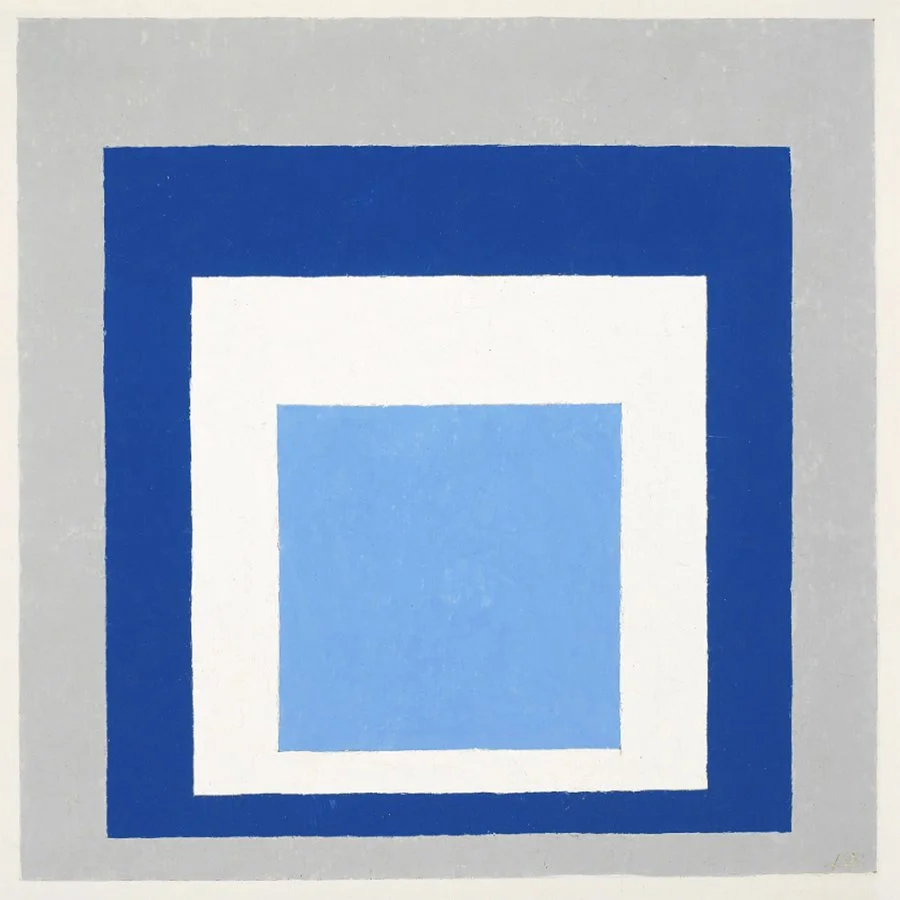

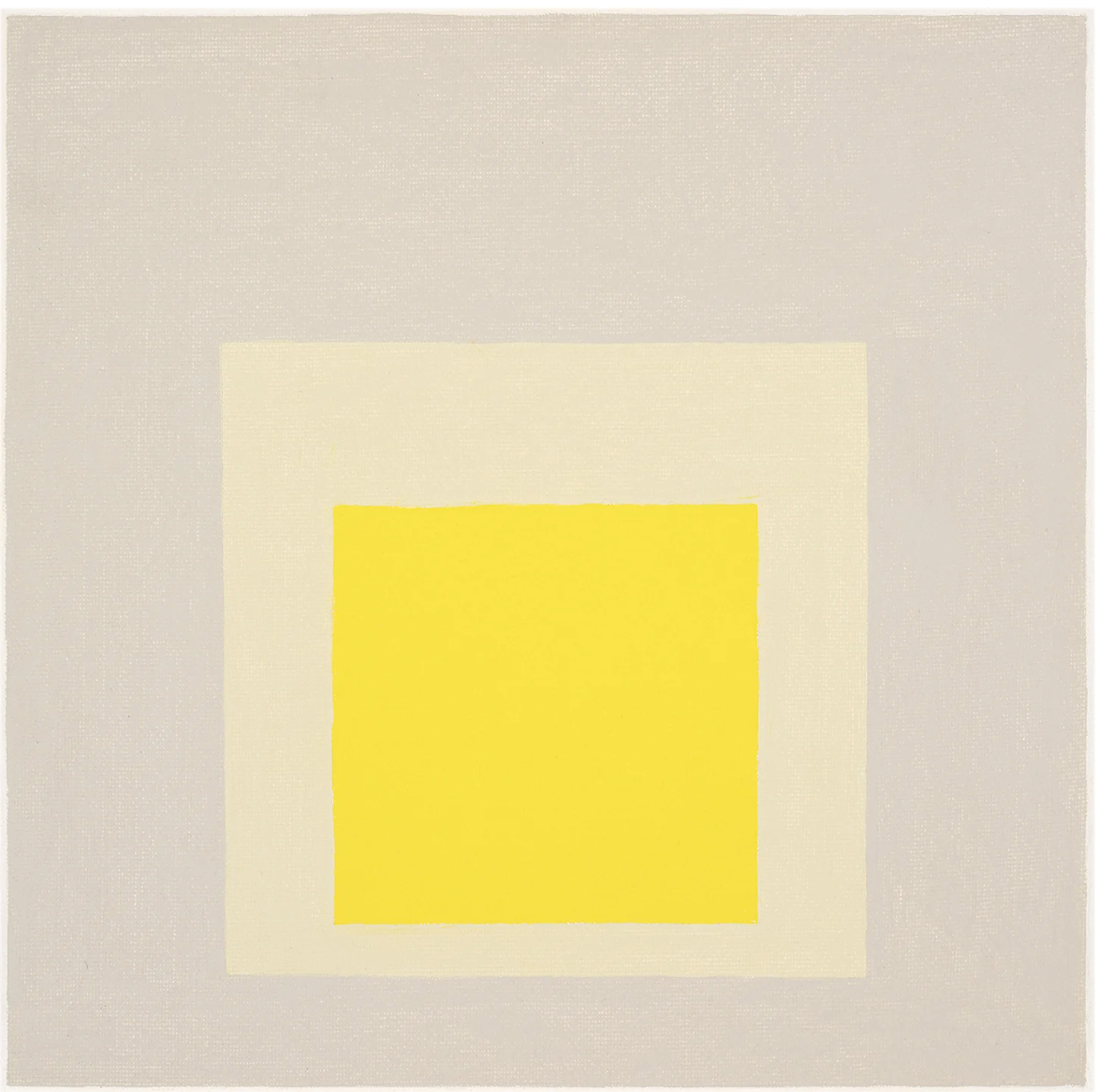
One of the most influential art-teachers of the 20th century Josef Albers’ pioneering methodologies continue to influence new generations of creatives today. Best known for his work with colour, Albers began the “Homage to the Square” series of paintings and prints in 1950 and continued to work on the project for the next 25 years.
The entire body of work includes more than one thousand paintings, prints and drawings, presenting vast “colour climates,” of juxtaposed undiluted colours of contrasting and complementary tones. “Homages” was Albers’ template for exploring the subjective experience of colour and the effects that adjacent colours have on one another. This iconic project changed the way people see colour and continues to inspire the next generation of creatives. In 1963, Albers published the seminal “Interaction of Colour”, one of the most influential books in the history of design. Conceived as a handbook for creatives, the work demonstrates Albers’ unique principles of colour theory, including colour relativity, intensity and temperature.
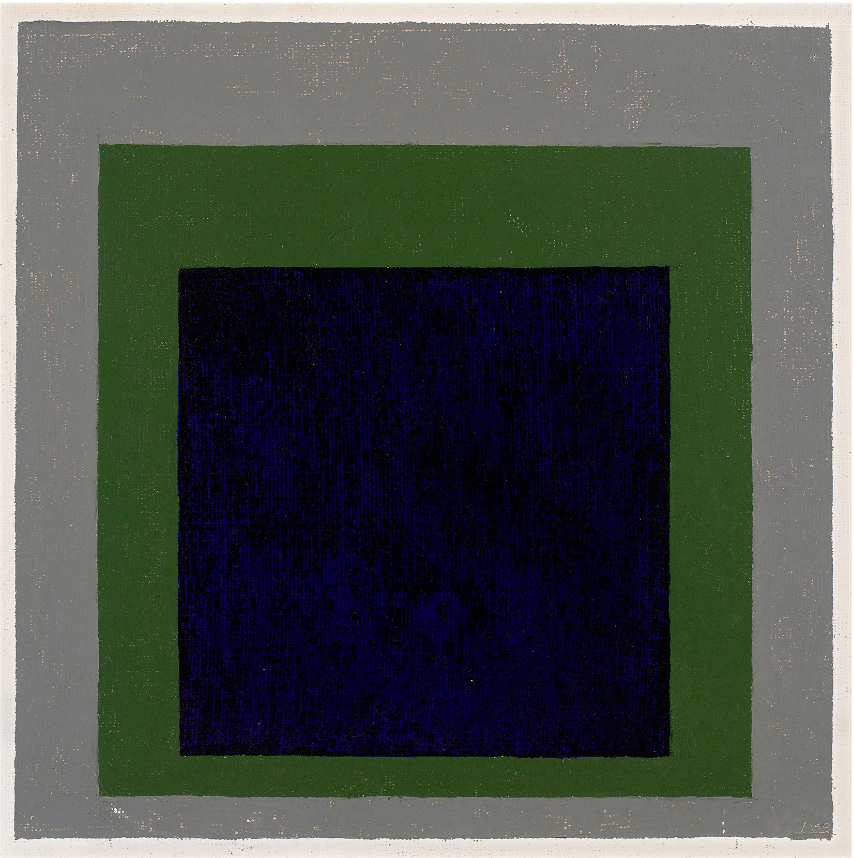
Above: Homage to the square, 1958
Albers arrived at the Weimar Bauhaus in 1920, the year after it was founded and became one of the first students to be appointed a master. He worked in carpentry, metalwork, glass, photography, and graphic design. It was there he met Annie, his future wife, soulmate and fellow teacher at the Bauhaus. In 1931 he began working on experimental assemblages, using discarded glass and recycled materials to create abstract works. Using non-conventional materials allowed him to develop the discipline and detachment necessary to create abstract forms.
In 1933 Josef and Annie Albers fled Nazi Germany and started a new life in the USA, where they became teachers at the experimental Black Mountain College in rural North Carolina, later settling in New York. As a teacher he had significant influence on the creative industry, inspiring a diverse range of artists including Donald Judd and Robert Rauschenberg.
Josef & Annie Albers
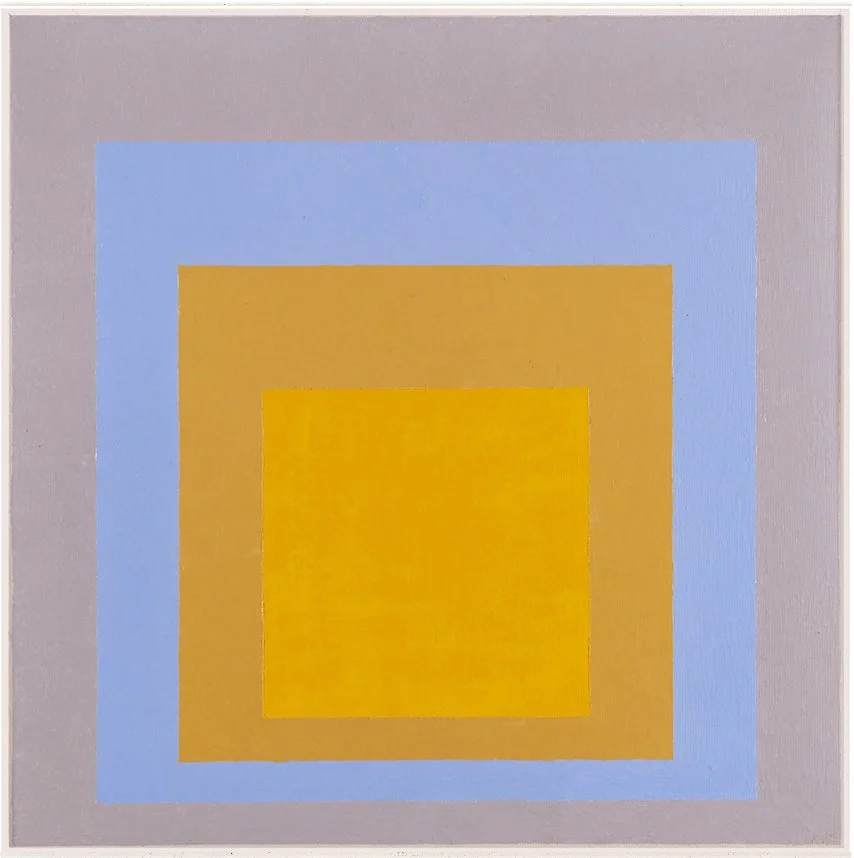

Above: In Wide Light, 1956